Hair is one of the easiest and most expressive features to describe, and similes help bring those descriptions to life. Whether you’re a student learning figurative language, a writer crafting vivid character details, or a teacher creating classroom examples, similes make hair descriptions more colorful and relatable. In this guide, we’ll explore 30+ detailed simile categories, each packed with examples, meanings, and usage tips for learners of all ages.
Why Similes for Hair Are Useful (H2)
Similes bring descriptions to life by:
- Adding imagery
- Helping readers visualize characters
- Making writing emotional and memorable
- Helping young learners improve creative writing skills
- Giving teachers ready-made examples
- Boosting kids’ vocabulary and imagination
1. Similes for Curly Hair
Curly hair is lively, bouncy, and often full of character.
Examples
- Her curls bounced like springs.
- His hair curled like coiled vines.
- Her ringlets spiraled like telephone cords.
Meaning
These similes show movement, texture, and tight circular shapes.
Tip for Kids
Compare curls to round-shaped things you see every day—slinkies, noodles, ropes, etc.
2. Similes for Straight Hair
Straight hair can be sleek, smooth, or flowy.
Examples
- Her hair fell like a waterfall.
- His straight hair lay flat as silk.
- Her hair streamed like ribbons in the wind.
Meaning
These similes show smoothness or straight lines.
Tip
Think of things that drop smoothly downward.
3. Similes for Long Hair
Examples
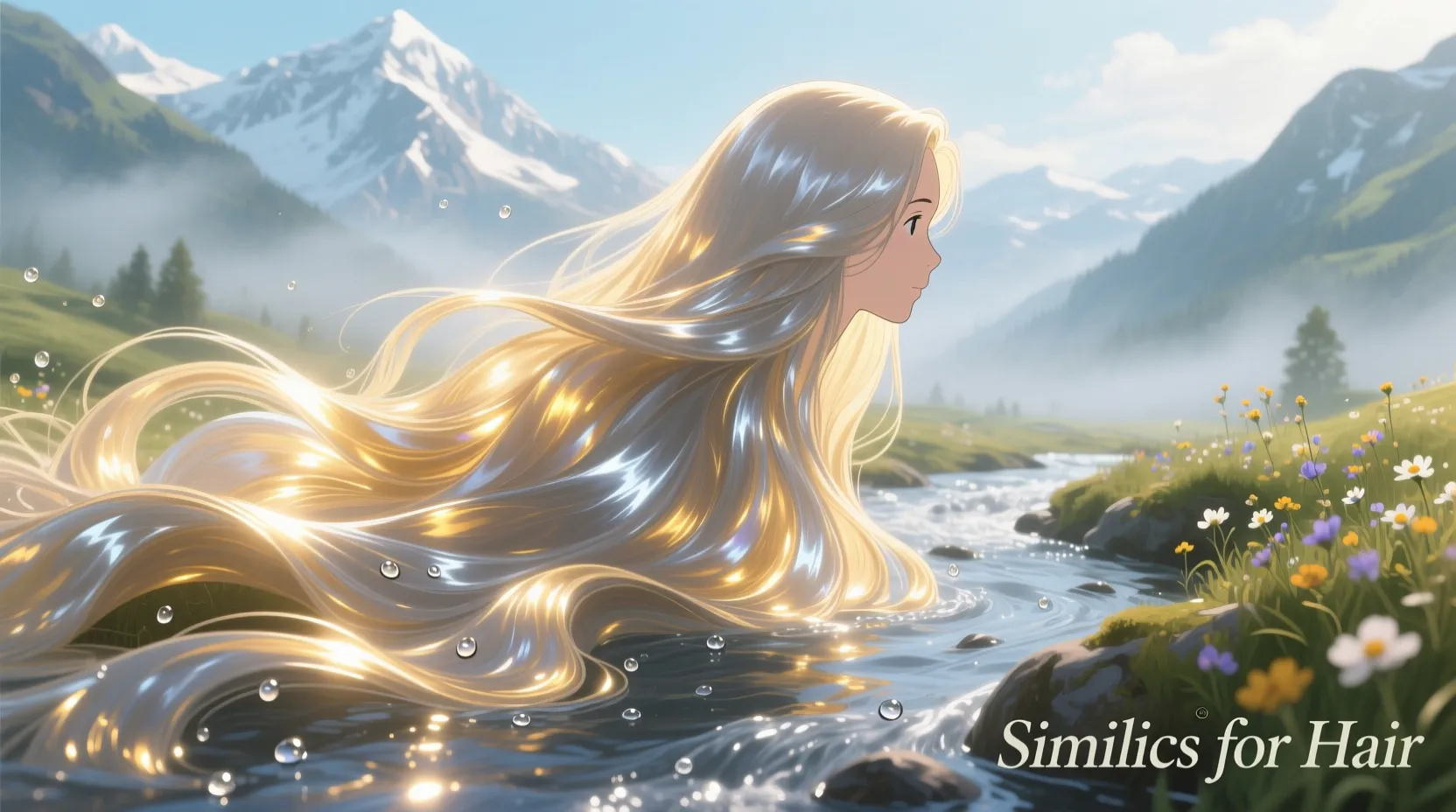
- Her hair flowed like a river.
- His long hair hung like curtains around his face.
- Her braid swung like a rope behind her.
Tip for Writers
Long hair similes often use imagery of flowing or hanging objects.
4. Similes for Short Hair
Examples
- His hair was cropped like fresh-cut grass.
- Her short bob curved like a seashell.
Meaning
Short hair can be sharp, neat, or textured.
5. Similes for Thick Hair
Examples
- Her thick hair was like a lion’s mane.
- His hair puffed like a cloud.
- Her braid was thick as a rope.
Tip
Thick hair similes show volume or density.
6. Similes for Thin Hair
Examples
- His hair was thin like spiderweb threads.
- Her hair lay light as feathers.
Usefulness
Helps describe delicate textures gently and respectfully.
7. Similes for Soft Hair
Examples
- Her hair felt as soft as cotton.
- His hair brushed against her cheek like velvet.
8. Similes for Rough or Dry Hair
Examples
- His hair felt like straw.
- Her dry hair crackled like dead leaves.
9. Similes for Shiny Hair
Examples
- Her hair shone like polished gold.
- His hair gleamed like a mirror.
- Her black hair glimmered like wet obsidian.
10. Similes for Dull Hair
Examples
- Her hair looked dull like dusty yarn.
- His hair lay lifeless as old hay.
11. Similes for Black Hair
Examples
- Her hair was black like midnight.
- His hair gleamed like a raven’s wing.
- Her hair was dark as ink.
12. Similes for Brown Hair
Examples
- Her brown hair glowed like warm caramel.
- His hair was brown as tree bark.
13. Similes for Blonde Hair
Examples
- Her blonde hair sparkled like sunlight.
- His hair was golden as wheat fields.
14. Similes for Red Hair
Examples
- Her red hair blazed like fire.
- His hair glowed like autumn leaves.
15. Similes for Gray Hair
Examples
- His gray hair shimmered like silver threads.
- Her hair was gray as morning fog.
16. Similes for White Hair
Examples
- Her white hair shone like snow.
- His hair was white as clouds.
17. Similes for Baby Hair
Examples
- The baby’s hair was soft like down feathers.
- His tiny curls were light as dandelion fluff.
18. Similes for Messy Hair
Examples
- Her messy hair stuck out like a bird’s nest.
- His hair was wild like a stormy sea.
19. Similes for Wet Hair
Examples
- Her wet hair clung like seaweed.
- His hair dripped like rain-soaked branches.
20. Similes for Silky Hair
Examples
- Her hair felt silky as satin.
- His silky hair slid through fingers like water.
21. Similes for Frizzy Hair
Examples
- Her hair frizzed like static-charged wool.
- His frizz stuck up like lightning sparks.
22. Similes for Wavy Hair
Examples
- Her waves rolled like ocean tides.
- His wavy hair curved like rolling hills.
23. Similes for Healthy Hair
Examples
- Her hair shined like polished silk.
- His healthy hair glowed like fresh leaves.
24. Similes for Damaged Hair
Examples
- Her damaged hair broke like brittle twigs.
- His hair felt rough as sandpaper.
25. Similes for Bouncy Hair
Examples
- Her hair bounced like springs.
- His curls jumped like popcorn.
26. Similes for Tangled Hair
Examples
- Her hair tangled like thorny vines.
- His knots were twisted like fishing nets.
27. Similes for Braided Hair
Examples
- Her braid was thick as a ship rope.
- His braids swung like braided leather straps.
28. Similes for Smooth Hair
Examples
- Her hair was smooth as marble.
- His hair glided like silk ribbons.
29. Similes for Fluffy Hair
Examples
- Her fluffy hair puffed like cotton candy.
- His hair lifted like wool clouds.
30. Similes for Coarse Hair
Examples
- His coarse hair felt like dry bark.
- Her thick strands were rough as rope fibers.
31. Similes for Hair in the Wind
Examples
- Her hair danced like flames in the breeze.
- His hair fluttered like streamers.
Similes for Beautiful Hair
Examples
- Her hair was beautiful like flowing silk art.
- His hair gleamed like a masterpiece painting.
📌 Tips for Students and Writers (H2)
- Compare hair to objects with similar texture, shine, or movement.
- Use similes that match your story’s setting.
- Keep comparisons familiar for kids (cotton, wool, clouds, ropes, etc.).
- Avoid overused similes—pick fresh, creative ones.
- Use sensory words: soft, shiny, bouncy, rough, coiled.
🌟 Conclusion
Similes make writing more vivid, emotional, and memorable. Describing hair through similes helps readers instantly imagine a character’s appearance—whether it’s silky, curly, wild, shiny, or soft. With the wide range of examples in this guide, students, teachers, and writers can explore infinite creative possibilities in their storytelling. The more you practice using similes, the more expressive and colorful your writing becomes.

Ariz Bookford ek creative aur insightful writer hain, aur similessons.com ke founder bhi hain—jahan woh students, writers aur readers ke liye simple, engaging aur helpful similes & metaphors ka content publish karte hain. Ariz ka likhne ka andaz modern, clear aur relatable hota hai, jo har umr ke readers ko inspire karta hai. Unka mission hai ke woh mushkil concepts ko asaan alfaz mein bayan karein, aur har reader ko ek naya, creative nazariya dein.