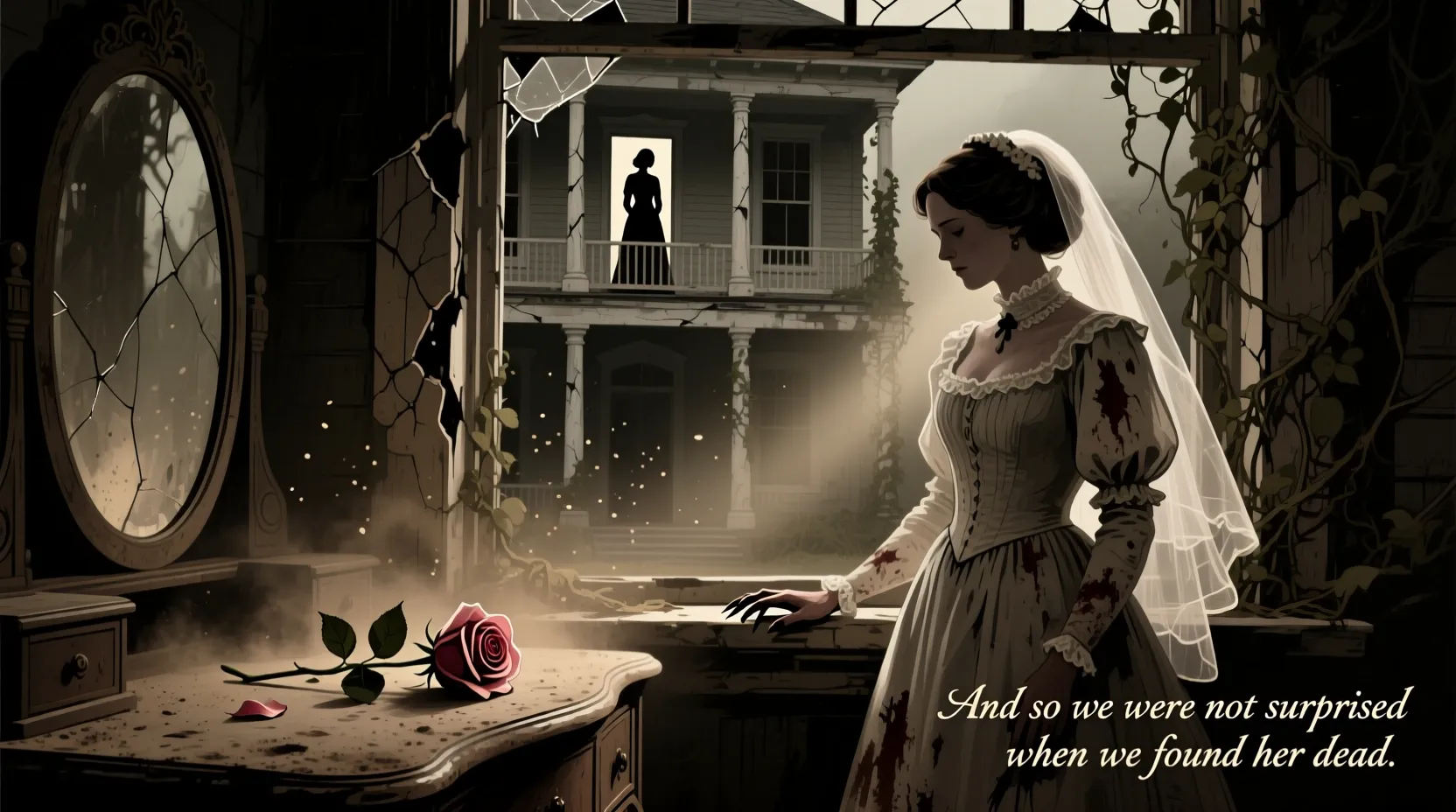
William Faulkner’s A Rose for Emily is a timeless short story full of vivid imagery and powerful literary techniques.
Among these, similes play a crucial role in helping readers understand Emily’s life, emotions, and the decaying Southern world around her 🌹.
Through clever comparisons, Faulkner brings Emily’s isolation, struggles, and inner thoughts to life, making her story both relatable and haunting 🏚️.
In this article, we will explore some of the most significant similes in the story, explain their meanings, and see how they enhance the depth and richness of the narrative 📚✨.
100+ Similes in A Rose for Emily
(Inspired by the story’s tone, themes, characters, and atmosphere)
Similes About Miss Emily Grierson 🌹
- Her silence was like a locked room, untouched for decades.
- Emily stood like a faded portrait, refusing to change.
- Her presence felt like an old perfume, lingering longer than expected.
- She moved like a shadow drifting between centuries.
- Her eyes were like dusty windows, hiding more than they revealed.
- Emily clung to the past like ivy gripping a crumbling wall.
- Her loneliness sat on her shoulders like a heavy winter coat.
- Her voice trembled like a forgotten melody.
- Emily kept secrets like a mother holds a fragile child.
- Her stubbornness was like iron warmed by grief.
Similes About Her Aging and Appearance 👵
- Her hair turned gray like silver threads woven by time.
- Her skin looked like parchment left in the attic sun.
- She held her chin high like a queen guarding her last throne.
- Her figure grew stiff like a statue carved from sorrow.
- She stood in the doorway like a monument refusing to fall.
- Her expression hardened like a gate rusted shut.
- Her body felt like a relic preserved in dust.
- Her movements were like slow pages turning in an old book.
- The years wrapped around her like vines around an abandoned house.
- Her presence remained like a ghost who never learned to leave.
Similes About Emily’s House 🏚️
- The house loomed like a giant shadow over the street.
- It smelled like memories soaked in dust.
- The windows were covered like eyes afraid to see the future.
- The walls echoed like empty rooms holding long-forgotten names.
- The furniture sat like loyal servants waiting for a master who never returned.
- Spiderwebs hung like lace woven by time and silence.
- The rooms felt like frozen moments trapped in air.
- The staircase creaked like tired bones begging for rest.
- The parlor stood like a museum of unspoken sorrow.
- The entire house breathed like a weary sigh from the past.
Similes About Southern Society and Tradition ⚜️
- Their judgment fell like soft whispers sharpened by pride.
- The town guarded its customs like a family guards its heirlooms.
- Their curiosity crawled like ants toward anything mysterious.
- Their politeness was like sugar coating bitter truths.
- The traditions clung to them like humidity in August heat.
- Their expectations pressed like hands insisting on obedience.
- Their gossip spread like ripples across still water.
- The community circled Emily like moths around a dim flame.
- Their memories of her father were like old portraits no one dared move.
- Their silence around her life was like a curtain pulled tight.
Similes About Death and Decay ⚰️
- Death sat in the house like a quiet visitor refusing to leave.
- The smell lingered like wilted flowers left too long in the sun.
- His body lay still like a stone sunk deep in the river of time.
- Decay crept like slow-moving shadows at dusk.
- The room held death like a sealed jar holds stale air.
- Time settled on everything like ashes from a dying fire.
- Her grief dried like petals pressed between book pages.
- The darkness wrapped around her like mourning clothes.
- Death lingered in the hallways like a forgotten tune humming low.
- The air felt heavy like a sigh held for decades.
Similes About Time and Memory ⏳
- Time passed like a river wearing away its banks.
- Her memories clung like dust that refuses to be swept away.
- The years folded like pages in a diary no one reads.
- The past returned like footsteps echoing in an empty hall.
- Her life drifted like twilight between day and night.
- The story unfolded like a tapestry threaded in reverse.
- Time wrapped around her like a slow-moving fog.
- Memory hovered like a whispering ghost at her shoulder.
- The past clattered like dried leaves caught in the wind.
- Her father’s absence weighed like a locked chest full of old letters.
Similes About Emily and Her Father 👨👧
- His commands struck like thunder across an open field.
- She obeyed like a daughter carved from duty.
- His protection tightened like a rope woven from pride.
- She stood beside him like a flower overshadowed by a towering oak.
- His presence shaped her like steel shaped in an unforgiving forge.
- She mourned him like a child mourning the sun.
- His absence hollowed her like wind carving into a canyon.
- She lived in his shadow like night clinging to the edge of dawn.
- His memory lingered like a stern portrait on a wall.
- She grew around his rules like a vine twisting around a rigid post.
Similes About Homer Barron 🚧
- Homer’s laughter echoed like a hammer striking metal.
- He moved through town like a storm breaking routine.
- His charm glowed like lantern light in a dim room.
- He towered over others like a city building among cottages.
- His presence unsettled people like wind shifting before rain.
- Emily watched him like someone watching the last train leave.
- He lived boldly like a man with no anchors.
- His smile brightened things like sunlight through dusty curtains.
- Homer entered Emily’s world like a sudden spark in the dark.
- His absence cut her like frost on spring blossoms.
Similes About Love and Loneliness 💔
- Her love clung like hands that refuse to let go.
- Her hope flickered like a candle fighting the wind.
- Her heart stretched like fabric pulled too tight.
- Her loneliness grew like shadows swallowing an empty room.
- Her desperation echoed like a prayer left unanswered.
- She held Homer like a secret she refused to release.
- Her devotion hardened like clay left too long in the sun.
- Her need for affection burned like a flame starved of oxygen.
- Her longing stayed like a haunting melody that never finishes.
- Love slipped from her grasp like water through trembling fingers.
Similes About The Town and Its Reactions 🏘️
- They watched her like spectators at a silent play.
- Their curiosity hovered like flies above a sealed jar.
- Townsfolk talked about her like a legend passed through generations.
- They waited for change like farmers waiting for rain.
- Their pity dripped like slow oil on rusted metal.
- Their assumptions wrapped around her like vines choking a forgotten gate.
- Their gossip moved like wind twisting through narrow streets.
- Their collective memory held her like a fragile relic too old to touch.
- They judged her like a jury convinced before hearing the truth.
- Their silent stares followed her like shadows stuck to her shoes.
Additional Bonus Similes Inspired by the Story’s Themes 🌑
- The truth hid like a letter sealed in a drawer.
- The secrets slept like stones at the bottom of a river.
- Her dreams withered like flowers left without rain.
- Her fate closed around her like a story returning to its beginning.
- The revelation hit them like a cold wind cracking open the night.
Why Similes Matter in A Rose for Emily ✍️
Similes deepen the emotional impact of Faulkner’s story. They help readers:
- Visualize the setting with more intensity
- Connect emotionally with Emily’s struggles
- Understand the social tension in Jefferson
- Feel the weight of tradition, decay, and time
- Experience the psychological texture of the narrative
Similes act like lanterns in a dark house—they illuminate what is felt but not spoken.
Tips for Using These Similes in Essays and Analysis 📘
If you’re writing a paper or presentation:
- Use them to support thesis statements about theme or tone.
- Compare your chosen similes to Faulkner’s imagery.
- Add them as creative examples of Southern Gothic style.
- Use them in creative projects, poetry, or classroom activities.
They help elevate analysis and interpretation with emotional clarity.
Conclusion:
“A Rose for Emily” is a story built on silence, shadows, and the heavy pull of time. Similes enrich this world by giving shape to emotions too deep for plain language.
They allow us to see Emily not just as a character, but as a symbol of love, loss, resistance, and inevitability.
Just like the townspeople, we observe her life unfold piece by piece—yet through similes, we witness it with greater understanding and empathy.
They turn her tragedy into something deeply human and hauntingly beautiful.
In the end, Emily remains like a fading rose, pressed gently between the pages of American literature—forever remembered, forever mysterious.
Discover More Post
200+ Similes for Hot Weather ☀️🔥 – Master the Art of Describing Summer Heat
🐱 250+ Similes for Cats: Explore the Purr-fect Comparisons
190+ Similes for Autumn: Capture the Magic of Fall 🍂